 24+ YRS EXPERIENCE IN THE 4WD INDUSTRY
  OVER 12,500 4WD PRODUCTS ONLINE
  20+ STOCKISTS AUSTRALIA WIDE
  SHIPPING AUSTRALIA WIDE & INTERNATIONALLY

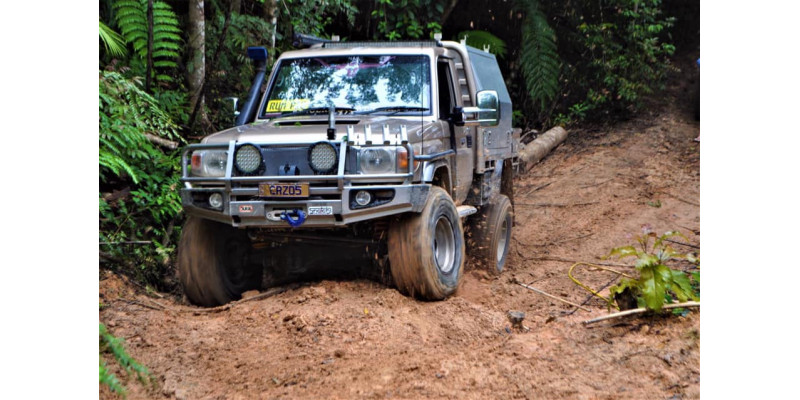
Before you hit the road for a big adventure – especially one that’s going to rack up some serious km – it’s crucial to have a 4X4 maintenance checklist sorted, along with a mid-trip check-in list. Think of it as giving your rig a once-over so it doesn’t chuck a tantrum halfway up a hill.
WHY PROPER PREPARATION IS KEY FOR OFFROADING
A solid 4WD checklist isn’t just about keeping your pride and joy in top shape; it’s also a golden chance to spot any dodgy bits that might end the trip before you even start. If your journey’s going to push you past your service limit, do yourself a favour and book a full service before you head off.
Here’s a handy list of basic service checks to tick off a week or two before you go bush-bashing:
c Oil & Filter – No brainer! Having fresh oil in the engine is never going to hurt. If you changed it less than 1000km ago then you’ll most probably be fine, but if you’re about to embark on an 8500km round trip then some fresh fluids are essential before you bail.
c Air Filter – Buy one anyway, even if the one in there still looks good. Think about all the dust you clean off your car after a hard day’s wheeling, your engine breathes this in all day. Travelling with a spare air filter is a must!
c Fuel Filter – Same goes here. Fuel filters last a good long time these days (around the 50,000km mark) but throwing a fresh one in and keeping the old one as a spare will be worth its weight in gold if you inadvertently cop a tank full of watery diesel.
c Cabin Filter – Just like your engine Air Filter, being able to breathe in dusty environments is fantastic. Give it a go by changing out your cabin filter! This has to be one of the most overlooked service items.
c Windscreen Washer Fluid – A full washer reservoir with some top-notch cleaning solution is an absolute lifesaver when you’re tackling dusty or muddy tracks. Unless, of course, you’re a fan of staring through a windscreen that looks like it lost a mud wrestling match!
c Coolant – You don’t have to swap it out before the trip, but chucking a bottle of the right concentrate in your spares kit is a no-brainer. If you nick a hose in the middle of nowhere, you’ll be glad you’ve got it. Just make sure it’s the right type for your rig—coolant isn’t a one-size-fits-all deal. Unless, of course, you’re keen on your coolant looking like that last mud puddle you went full-send through.
c Front & Rear Brake Pads & Rotors – Pads have less than 5mm of meat left on them and your rotors have enough of a lip on the edge to make Mick Jagger jelly? Swap them out now, especially if towing or driving heavy. It’s as cheap as insurance gets. Something people don’t consider is Mud and Dirt works like sandpaper wearing away the pad material FAST!
c Drum Brakes – While drums last a good long time, check the wheel cylinders and meat left on the shoes before you leave and click up the adjusters until you can just hear them making contact when you turn the wheel by hand.
c Driveline Uni Joints Check & Grease – Losing a uni-joint out on the tracks is a sure-fire way to ruin your trip and give you a PITA (pain in the... axle, obviously). If there’s too much play in the joint, don’t muck around – swap it out before you head off. While you’re at it, give the grease nipples (zerks) a solid dose of grease to keep things running smooth. Just remember, more grease isn’t always better – overdoing it can cause more headaches than it fixes, so go easy on the pump
ESSENTIAL CHECKS BEFORE HITTING THE ROAD
PRE-TRIP CHECKLIST
c Wheel Bearings – Jack up each wheel individually and with your hands at 6 and 12 on the tyre, rock it back and forth. If there’s more than a little movement your wheel bearings will need renewing before you bounce. Same goes for trailer wheels too Legend!
c Intake Clean – If your rig’s got an Exhaust Gas Recirculation (EGR) valve (and if it’s newer than ‘96, it almost definitely does), there’s a good chance your intake’s packed with a fair bit of carbon build-up. You can grab some spray additives to clean it out, but if you want the job done properly, you’ll need to pull the intake manifold and scrub it out with brake cleaner and a stainless brush. Just be ready to look like you’ve been living in a cave – it’s not a pretty job, mate!
c Suspension Bushes – Crawl on under your vehicle (ideally while it’s on a hoist) and get a decent length lever or prybar onto each suspension joint and inspect them all for wear and tear. Swapping a flogged out bushing on the side of the track in the heat or rain is exactly nobody’s idea of a good time.
c Ball Joints – Independent suspension and steering systems have a bunch of ball joints, and trust me, they’re all pretty important. Give them a good wiggle and if they’ve got a grease nipple, a quick pump of the grease gun will do the trick. Just like the uni-joints, they don’t need to be bursting at the seams, so ease up, Turbo – no need to go overboard!
c Grease All Nipples – Speaking of nipple fittings, you’d be surprised how many little buggers you’ll find scattered all over your rig – from the spare tyre swing away to your tail shafts. Go on, hunt them down and give them a good squirt with your grease gun. It's a small job but worth its weight in gold.
c Swivel Hubs (Solid Front Axle) – Inspect the swivel hubs closely for play or leaks. They’re not a fun job to do, but it’s a hell of a lot more fun doing them in a shed with a cool drink on hand than in the heat and dust with the kids asking are you done yet?
c CV Boots – All independent suspension setups have inner and outer CV joints, and they’re covered by rubber boots to keep the grease in and the dirt out. Give these boots a good inspection and replace them if they’re looking worse for wear. Carrying a spare CV joint is a solid move, so when you hear that dreaded bang in the bush, you can grin like a Cheshire cat – knowing you’ll be driving out without a hitch!
c Tyre Condition – Check the depth, wear pattern, and sidewalls on all your tyres, including the spare(s). If they’re all looking healthy, give them a rotation and you’re sweet. But if any look a bit dodgy, don’t muck about – replace them now. And a little reminder: the common lifespan for a tyre is around 10 years, so keep an eye on that rubber!
4WD MODIFICATIONS: ENSURING PEAK PERFORMANCE
c Snorkel – An absolute must for dusty desert missions and water crossings. These bad boys do wonders for your air filter’s lifespan in almost every condition, so it’s hard to say no. And if you’re heading out in a convoy through sand or bulldust, slap on a snorkel sock for extra protection. It’s like a face mask for your 4X4’s lungs – keeping the nasties out so your engine can keep breathing easy!
c Winch – Being an introvert isn’t a crime, but when you’re bogged to the axles with no one around, you’ll wish you had a winch! Highly recommended for solo adventures. Even if you’ve already got one fitted, show it some love before you head out: pull the rope all the way out, clean it up, and spool it back on under load. Don’t forget to regrease the gearbox end and give the solenoid contacts a good clean. A little TLC now will save you from yelling at trees for help later!
c Recovery Points – Here’s the harsh truth: most new 4WDs come with exactly zero recovery points, especially up front. It’s like they expect you to never get stuck—wishful thinking, right? If you’re in a pinch, a tow hitch can work (just the pin, though—NEVER the tow ball unless you want a flying projectile). Some Bullbar come with built-in recovery points, but double-check you’ve got a proper spot to attach a shackle. Because when the going gets tough, you’ll want a solid point to pull from—not a dodgy makeshift solution that’ll end in tears!
c Bar work – While this is fairly subjective, there are a lot of practicalities to fitting barwork. A front bar not only gives a place to mount UHF aerials, lights and a winch but also protects against animal strikes (because nothing ruins a road trip like a roo in your radiator). Sliders will prevent your sills from looking like wrapping paper on Boxing Day and a rear bar can be practically used to mount the spare, jerry cans and often allow fitment of a long-range fuel tank.
c Tyres – If you’re grabbing new rubber before your trip, make sure it matches your mission. The Simpson Desert? You don’t need gnarly mud terrains out there—ATs will do just fine. But if you’re heading to Tassie’s rugged tracks or tackling the Cape, highway terrains (HTs) are about as useful as an esky without ice. Pick the right tread for the job, and your tyres will thank you!
c Suspension – Same story as tyres, really. Sure, a 6-inch lift and flexing over a 44-gallon drum might score you all the Insta-points, but it’s not exactly practical for tackling the Top End or cruising around Moreton Island. On the flip side, rocking stock suspension for a hardcore trip to the High Country will leave you wishing you’d stayed home. The trick? Get the setup that suits your adventure. Give us a shout, and we’ll sort you out with the perfect rig for your needs – no drum-flexing required!
c Roof Rack – Fun fact: having a roof rack fitted can increase fuel usage up to 20%. Ask yourself is it’s really required. With that said sometimes, your 4WD’s boot just can’t handle all your gear, and you don’t want to look like you’re moving house every time you go camping, so mounting RTTs, solar, and carrying swags, tents and awnings, they’re mandatory.
c Awning/Gazebo – The debate over which one of these is better will continue to rage for quite some time, but regardless of your preference, having some sort of shelter from the weather will make your camping experience a billion times better. Unless being wet is your thing, go for gold.
c Drawers – For any extended trip, having the storage side of things sorted will make packing and finding the gear you need so much easier it’s not funny. Drawers and other organisational accessories can make all the difference between keeping everything neat, tidy and the rear of your 4WD looking tip top.
c Gauges – Running a turbo diesel? Make sure you have a boost and EGT gauges (or both individually) fitted. These really are non-negotiables and can potentially save you thousands on an inadvertent engine rebuild.
PACKING THE RIGHT GEAR FOR OFFROAD ADVENTURES
c Recovery Gear – With so many recovery kits on the market, there’s really no excuse for being caught unprepared when you get stuck. At the very least, make sure you’ve got an equaliser strap, a snatch strap in good condition, multiple rated shackles (soft shackles are safest), and ideally, some sort of winching setup. If you’re in a pinch, a Hi-Lift jack can even double as a hand winch. And for the love of all things 4WD, don’t be that guy on the beach asking for a quick snatch and expecting others to do the heavy lifting with their gear!
c Water – A minimum of 4L per person per day is recommended for outback travel, and while you don’t need to go overboard, you definitely need to plan for the worst-case scenario. It’s also worth keeping your water in a couple of different containers, so if one of your water tanks springs a leak, you still have plenty in reserve.
c Sleeping Arrangements – You’d be amazed how often stuff like pillows and blankets get left behind. We like to tailor our sleeping set-ups around overnight temperatures for the places we’re headed. The Top End gets the bare minimum, while the desert (where it gets below 0ºC after dark) or High Country get the full thermals and 12V electric blanky treatment.
c Cooking – If you have the lithium amperage and are willing to outlay the coin, then induction cooking is fantastic. If you’re on a budget and don’t mind waiting a little longer for the water to boil, then a gas cooker still ticks all the boxes. A good set of melamine plates and cups; a billy or collapsible kettle and some cutlery and you’re sorted. Pro tip: plan, cook and freeze as many meals as you can before leaving. That way dinner prep becomes a simple heat-and-eat affair, saving the war against the bugs while trying to become the next Gordan Ramsey.
c PPE – Okay, it’s unlikely you’ll need a hard hat and the high-vis but things like sunnies and sunscreen shouldn’t be an afterthought. Don’t forget to protect the backs of your hands either, they spend a long time in the sun when you’re spending a day or three in the saddle. Also, if you’re in snake country, some long pants and closed in shoes aren’t a bad idea either.
c Toolkit – Tailor this one to your vehicle. A Japanese-made 4X4 (for example) is unlikely to require a set of imperial sockets, and very few 4WDs will require the use of a 1in-drive impact wrench. A set of sockets of the right sizes, a set of Torx bits, Allen keys and the usual things like metal putty; rescue tape and tie wire will get you out of a lot of jams.
PRE-TRIP PLANNING: MAPPING YOUR ROUTE
c Route Planning – We live in a country of weather extremes where track conditions can and do change on the regular. Having your route mapped out, as well as a backup route should things get spicy, is a must. It’s a good idea to keep a day or two up your sleeve as well should things get downright nasty.
c Mapping software – Modern GPS mapping is pretty amazing these days. While we’ll always be fans of carrying paper maps, having a dedicated GPS device along for the ride is fantastic. Hema and VMS are both popular, but everyone has their faves so check them all out for yourself before pulling the trigger.
c Weather App – As mentioned, the weather can go from bright and sunny to the fourth horseman of the apocalypse with next to no warning, so having a weather app on the pocket computer is just good sense. It also allows you to tailor your trip to destinations where the weather is nice rather than having to set up camp in a monsoon.
c Conditions Change – Whenever you're nearing a destination, it’s always a good idea to stop by a local community, top off the tanks, grab some lunch, and have a chinwag about the track conditions. More times than we can count, we’ve been given the good oil by someone who's already driven the route we’re planning. It's saved us time, money, and fuel – not to mention avoiding unnecessary hassles. So, don’t be shy – locals often know best!
COMMUNICATIONS AND EMERGENCY PREP
c EPIRB—Emergency Position Indicating Radio Beacon. Push the button, and the cavalry come running. It’s a last-ditch solution for when it hits the fan but having it and not needing it is way better than needing it and not having it. Just note they are coming for you, not your vehicle or belongings!
c Satphone – Touch base with the homestead; tell your mum that you love her; trying to find a spare part you just broke. A satphone is not cheap nor is it particularly convenient, but it can put you in touch with pretty much anyone from pretty much anywhere, which makes them highly useful.
c Daily Calls – Planning your route and knowing roughly where you'll be on which day, you can pass this info along to someone back home. Set up a plan to check in every day or two to keep them updated on your whereabouts. If they haven’t heard from you in a few days, they’ll know to raise the alarm. This simple method has saved lives, so it’s well worth the effort to keep your loved ones in the loop.
c Starlink – A modern game-changer. Starlink allows you to access the internet, and thus the rest of the world, from a huge number of remote locations across the country, plus it’s an on-demand service so is relatively low-cost to use. In no time your mates will be calling you Elon!
c First Aid and Snake Bite Kits – Let’s face it, no one wants to be in a situation where they need a snake bite kit, but when you’re out bush, it’s better to have one and not need it than need it and not have it. A good snake bite kit usually includes compression bandages, antiseptic, and instructions, but it’s also essential to know how to use it. On top of that, always carry a comprehensive first aid kit for the unexpected – cuts, sprains, or worse. Knowing how to handle a snake bite or other injuries can be the difference between a story and a trip to the hospital. Always be prepared, mate – you never know what’s lurking around the corner (or under that rock).
FINAL CHECKLIST
c Your vehicle is in top mechanical condition and is fully prepared to take on the tracks you’re aiming it at. The Chuck Norris of vehicles!
c You have a full complement of spare filters, and some small bottles of fluids should something go wrong.
c You’ve been over the main mechanical components like the suspension, fuel, cooling, braking, steering, bearing and rotational systems and are happy with it all.
c You’re confident the mods installed are the right ones for the terrain you’ll be tackling.
c You have at least one recovery point.
c You and your passengers have the right gear and are prepared for emergencies.
c Your electrical and navigational requirements are installed, charged and ready to go.